
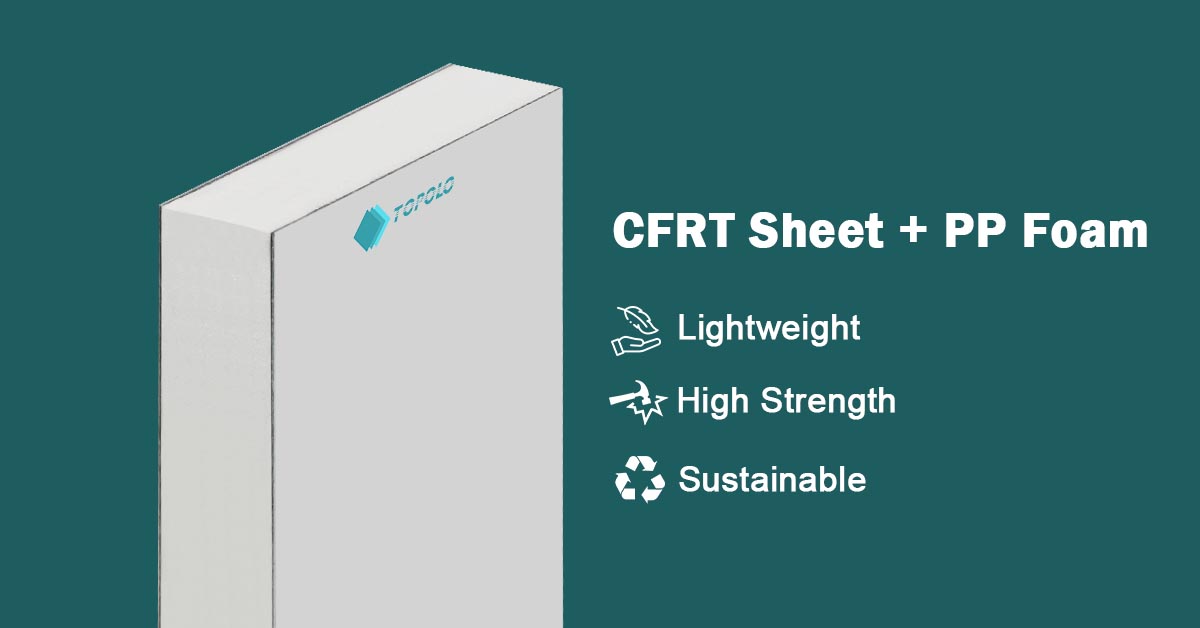
Amid the global pursuit of lightweighting and a circular economy, XPP (extruded polypropylene) foam core material is becoming a key alternative to traditional materials. With its core advantages of recyclability and lightweighting, it is revolutionizing technologies in truck trailers, RVs, composite panels, and other fields, offering a new solution for the transportation industry to break free from its reliance on plywood.


Specifications
| Total Thickness | 5-150mm |
| Length | ≤12m. |
| Width | ≤2.8m. |
| Core Materials | XPP (extruded polypropylene) foam core. (Density: 33~200kg/m³) |
| Skin Materials | CFRT sheet. (0.7~2.0mm) |
| Layers of UD Tape | 2~9 layers, the number of layers can be customized. |
| Surface Film | PET/PVC/PP film. |
| Surface Color | Natural/black and other colors can be customized. |
| Performance Treatment | Anti-ultraviolet, flame retardant, antistatic. |
| Process Options | CNC machining services. |
Differentiated Advantages of XPP Foam
- Lightweight & Impact Resistance
It combines the low density and light weight of closed-cell foam with excellent impact and load resistance, meeting the demands of heavy-duty applications such as RVs, trailers, and truck floors and sidewalls.
100% Recyclable
- 100% Recyclable
XPP foam is recyclable and can be reused in the production of the next product after the composite panel reaches the end of its lifespan.
- Stable Performance
XPP foam replaces plywood, addressing issues such as weight, moisture absorption, and deformation. It also reduces wood consumption and helps the transportation industry lower its carbon footprint.
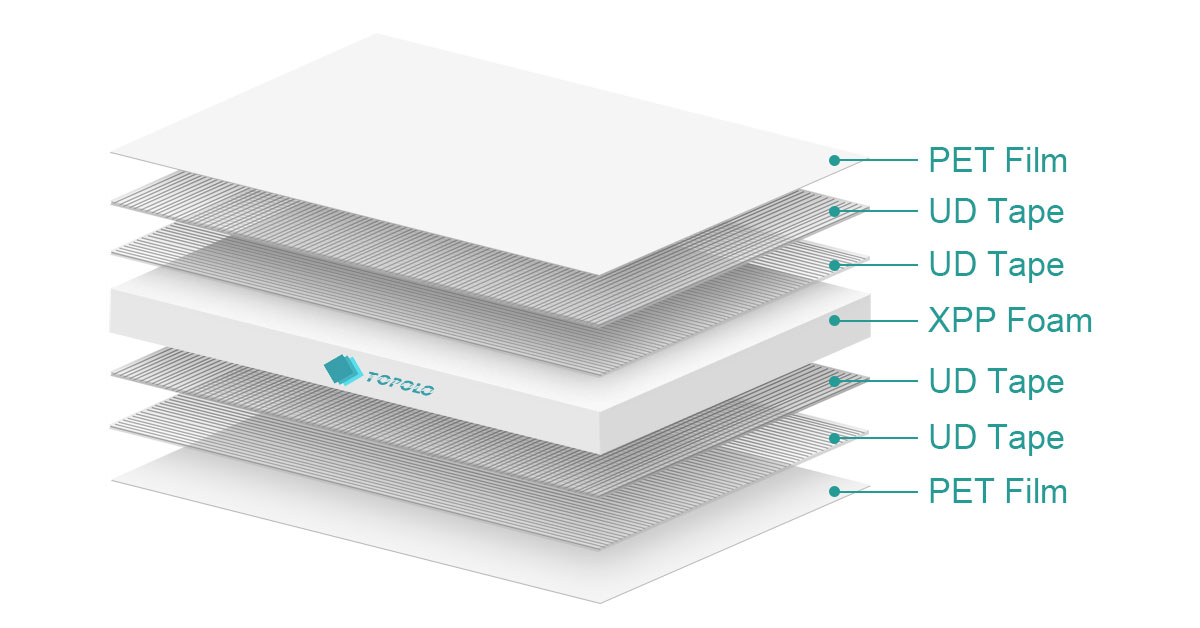
Structural Diagram of CFRT XPP Sandwich Panels
Composite Process of CFRT XPP Sandwich Panels
Compared to composite panels that rely on adhesives, XPP foam is fused to the CFRT (Continuous Fiber Reinforced Thermoplastic Polypropylene) skin through a thermoplastic composite process, avoiding the delamination problem of the foam sandwich panel.
The heated lamination composite process offers high production efficiency, allowing the composited panels to be used immediately. This efficiency far exceeds the high-pressure vacuum forming of traditional FRP-skinned foam-core sandwich panels (which requires several hours of adhesive curing), significantly shortening production cycles.

Innovating the Transportation Market
The transportation industry’s demand for lightweight, durable, and cost-effective materials fully leverages the performance of XPP foam composite panels.
- Weight Reduction: Reduces costs and increases efficiency, improving fuel or electricity efficiency and lowering transportation costs.
- Durability: Effectively withstands the heavy loads, shocks, and vibrations experienced by trucks and trailers.
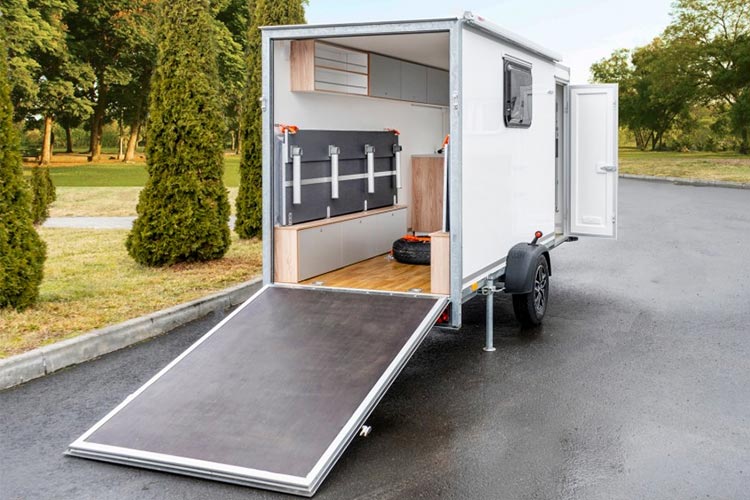
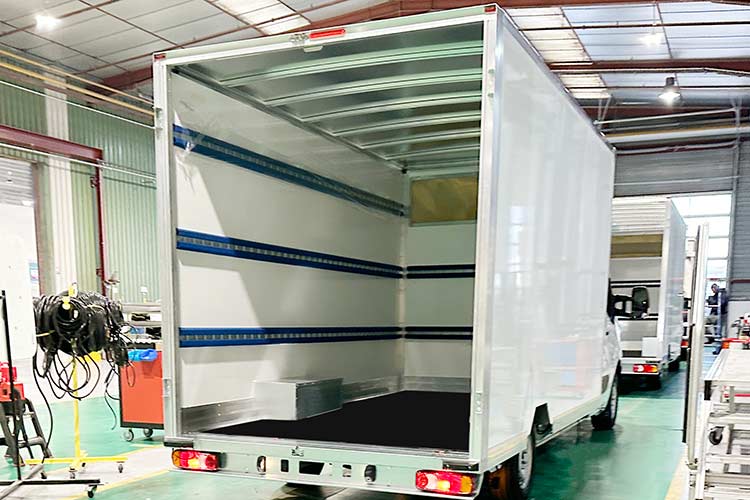
TOPOLO focuses on the composites industry’s key challenges of “Lightweighting + High strength + Sustainability” providing modular composite board solutions for industries such as transportation and construction.